
Xploration date 24/09/2023
The Italian alps provided a decisive barrier against military attacks during the 19th and early 20th century. It’s no wonder fortresses were built in strategic points along the peaks of these mountains. Let’s expore two of these buildings.
The Col del Finestre fortress is a military building that was built in the shelter of a rocky wall overlooking the Col del Finestre in the municipality of Meana de Sousa as a support work for the other fortresses of the Piazza Forte of Fenestral and Asieta.
The fortress was built on a hillside slope overlooking the underlying military road of the Col del Finestre. which can be reached by a path on the side of the fortress, you can still clearly see the two areas where the cannons were housed, through which the fortress can be accessed through an underground tunnel in the rock itself. The building had two floors and a protruding caponier that was used for close defense of the fortress. The second floor vault was composed of particular masonry arches, while the first floor ceiling was made of wood.
Currently, the structure is in poor condition. The drawbridge and its forepart are gone, and hence the only way of entering is through breaches in the outer wall.
The fortress had a peculiar feature. Its retractable drawbridge used for access was at right angles, which was housed on a fixed forepart anchored to the access road to the fort, and which allowed one to cross the drop below the entrance to the fortress. There is a tunnel built into the rock situated inside the structure which led to warehouses, command rooms, and to two pits which were also dug into the rock, and which housed the two 57-millimeter Grusin cannons. When the weapons weren’t used, they were lowered thanks to a system of weights and counterweights, thus making them completely disappear from view.
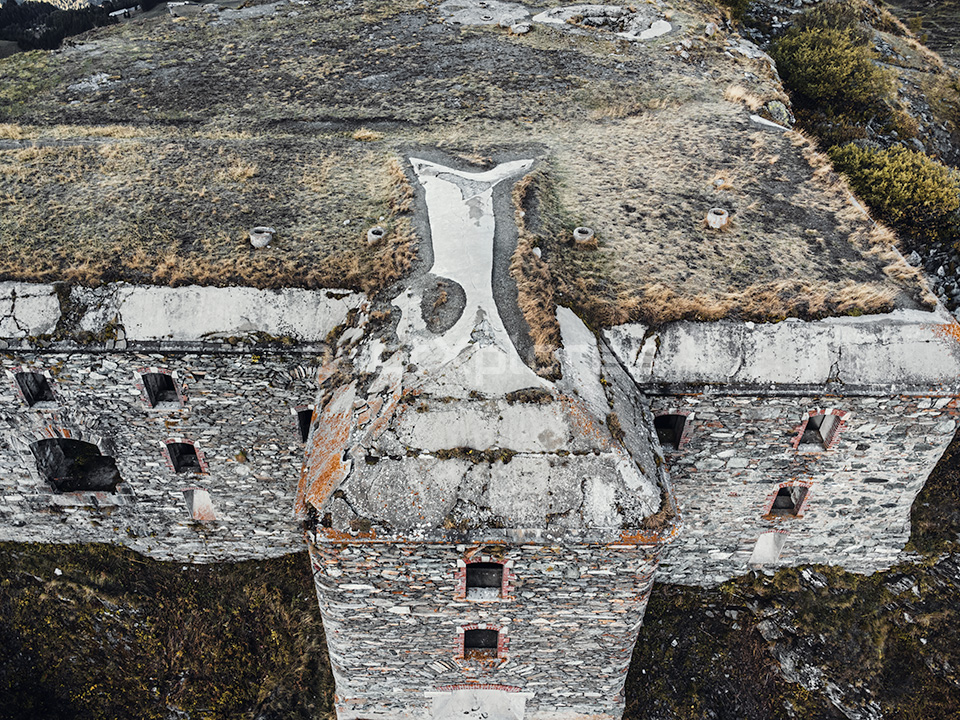
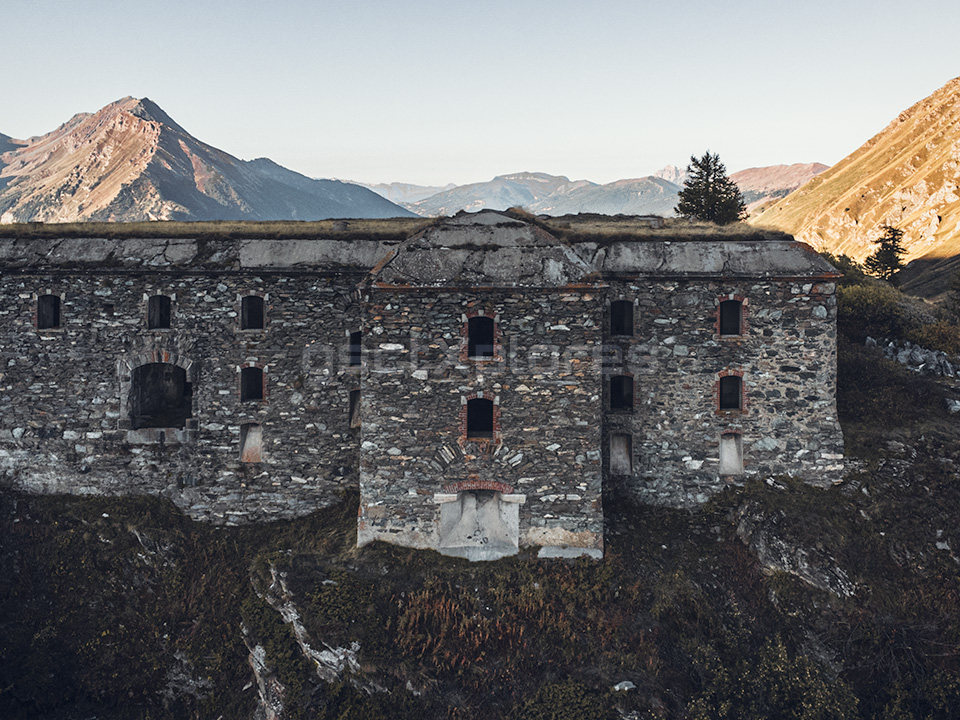
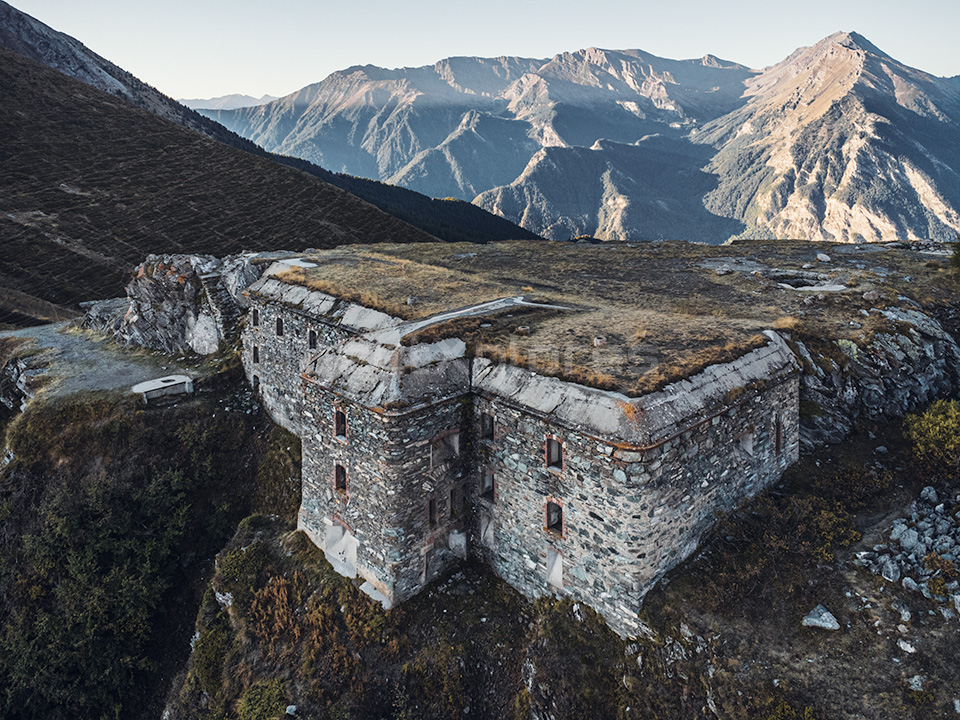
130 men were employed at the fortress, some of whom were engaged as artillerymen for the two cannons, others for the normal operation of the fortress, and others as riflemen or machine gunners. The fortress was used only for a few years after its construction and, like all fortresses in the area, it was stripped of its armament during the First World War as cannons and machine guns were taken to the Italian Eastern Front. After the First World War, the fortress was never rearmed, and in 1928 it was decommissioned. Although many have entered this fortress and left their mark, the now empty labyrinth of passages and tunnels can only lead one to wonder what living in this structure might have been like.
Fort Serre-Marie was a protection battery of the Fenestrel Fortress on the border with the municipality of Hussot, however, this fortification can be considered a separate part of the Fenestrel Fortress.
Located on the road between Pracatinat and Col del Fenestre, the fort was built in 1892 to defend the upper valley and the Fort del Valle road.
The fort, which could contain 200 men, has a rectangular plan with a flat roof on which artillery cannons were placed arranged in barbette together with mortar emplacements.


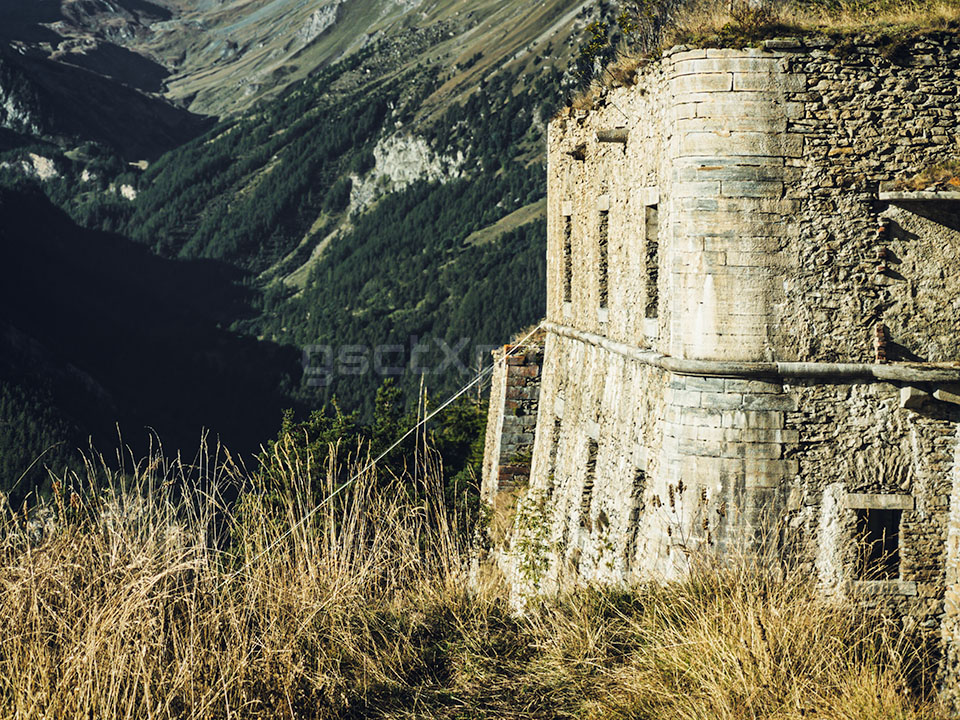
The fort is built with cut stone walls and rounded edges. It has a large entrance and is surrounded by a (now dried out) moat. Numerous loopholes for close defense are visible on the walls.
In the period between the two world wars, Fort Sere-Marie was used as an ammunition depot and warehouse, as well as a shelter for troops.


 gsctXplores